Amnesty International, the Sri Lankan government and contemporary press reports attributed the killings to the LTTE. The sources reviewed for this record do not report a claim of responsibility or a denial by the LTTE.
Casualty figures by source
| Source | Killed | Injured |
|---|---|---|
| [1] The Sunday Times (Sri Lanka), 199927 men, 17 women and 10 children; 48 killed in Gonagala and 6 in two neighbouring settlements. At least four people seriously wounded. | 54 | 4 |
| [2] Frontline (The Hindu group), 199946 killed in Gonagala and two in each of two other hamlets. | 50 | — |
| [3] Amnesty International, 1999“More than 50” Sinhalese civilians killed in three villages. | — | — |
Figures differ between sources and are shown side by side rather than averaged.
Summary
In the early hours of 18 September 1999, a group of LTTE cadres entered Gonagala, a Sinhalese farming settlement in Ampara District in eastern Sri Lanka, and killed villagers in their homes, most of them while they slept. The attackers then moved on to two neighbouring settlements. Contemporary reports put the death toll at 50 to 54 men, women and children [1, 2]. Amnesty International condemned the “deliberate killing” of more than 50 Sinhalese civilians by members of the LTTE [3].
Background
Gonagala lay in 31 Colony, a settlement about 15 miles from Ampara town [1], in a division of Ampara District bordering Batticaloa District, parts of which were then under LTTE control [2].
Amnesty International described the attack as a return to large-scale deliberate attacks on Sinhalese and Muslim civilians in the areas bordering the north and east, after three years in which no atrocities of that scale had been reported [3].
What happened
The attack began at about 2 a.m. [1]. The Sunday Times reported that the attackers went through about 11 houses in the Gonagala settlement, killing 48 people, before moving to two neighbouring settlements, where they killed six more [1]. Frontline gave a lower count: 46 killed in Gonagala and two in each of two other hamlets [2].
Victims were hacked, stabbed or decapitated with knives and machetes. The Sunday Times reported that only one person was shot, with a revolver [1], while Frontline reported that no firearms were used [2].
Frontline’s correspondent described the scene on the day of the attack: whole families killed in their houses, including children killed in their beds, and bodies still awaiting the judicial authorities some twelve hours after the attack. The magazine also reported the bodies of 14 people in Chilaw Bund village in the Gonagala division [2].
Victims
The Sunday Times reported 54 dead: 27 men, 17 women and 10 children, with at least four more people seriously wounded [1]. Frontline reported 50 dead; of the 46 killed in Gonagala, it listed 31 men and 15 women and said 14 were children [2]. All the victims reported were Sinhalese civilians [3].
The attackers
The Sunday Times reported that about 75 LTTE terrorists took part [1]. Frontline reported that the number of attackers was not known, that defence authorities estimated about 10, and that villagers’ accounts indicated women cadres were among them. It reported that the attackers had apparently come from Batticaloa District [2].
Response
The Army and the Special Task Force began tracking operations the following morning [1]. Deputy Defence Minister Anuruddha Ratwatte visited the scene with the Army Commander and the Air Force Commander and condemned the killings, describing the LTTE as desperate after military setbacks in the Vanni [1, 2]. President Chandrika Kumaratunga expressed shock at the massacre and promised assistance to the victims’ families [2].
Amnesty International called on the LTTE leadership to halt all attacks on civilians immediately and to instruct its members to comply with international humanitarian law [3].
Funerals
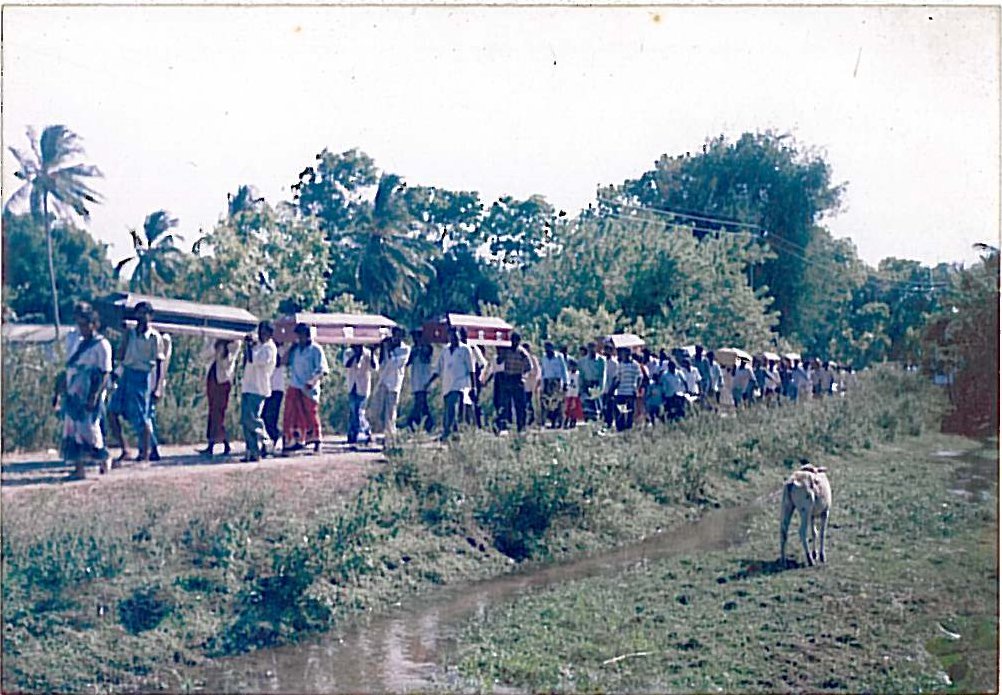
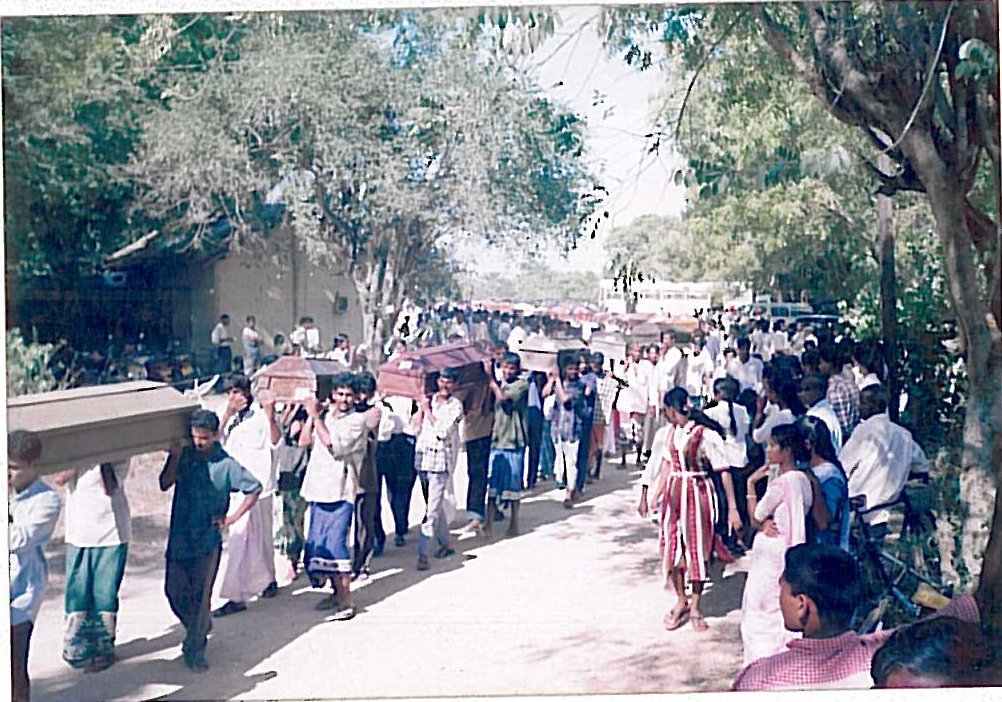
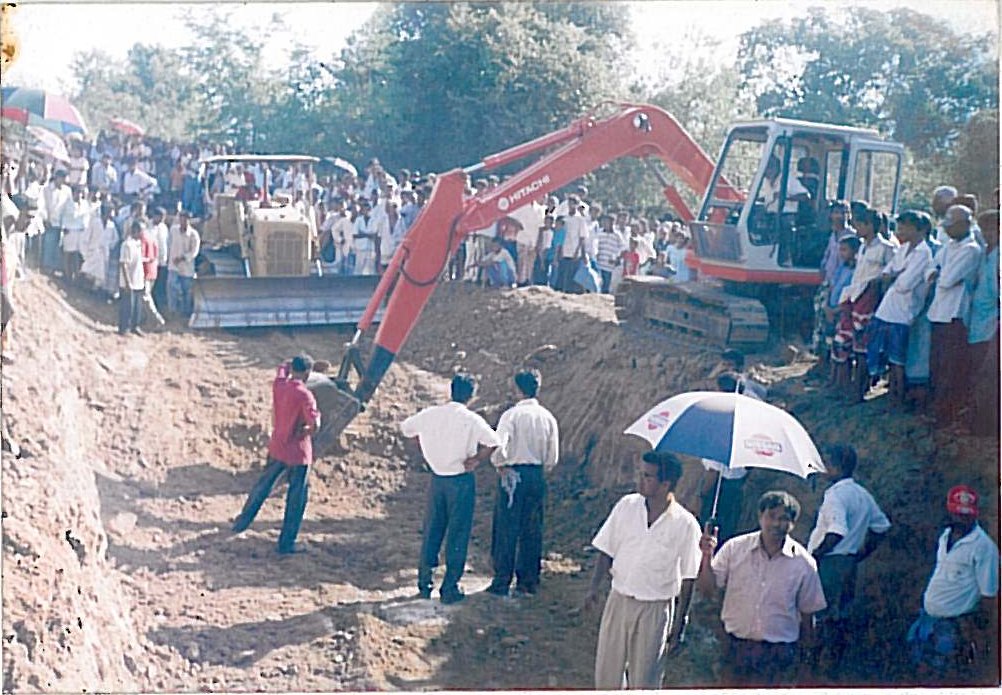
Aftermath
Two weeks later, more than 1,000 people from villages in the area, including women and children, were sheltering at Uhana Primary School for fear of further attacks. The Sunday Times described the massacre as a direct result of inadequate security for the most exposed villages in the district [4].
Photographs from the scene
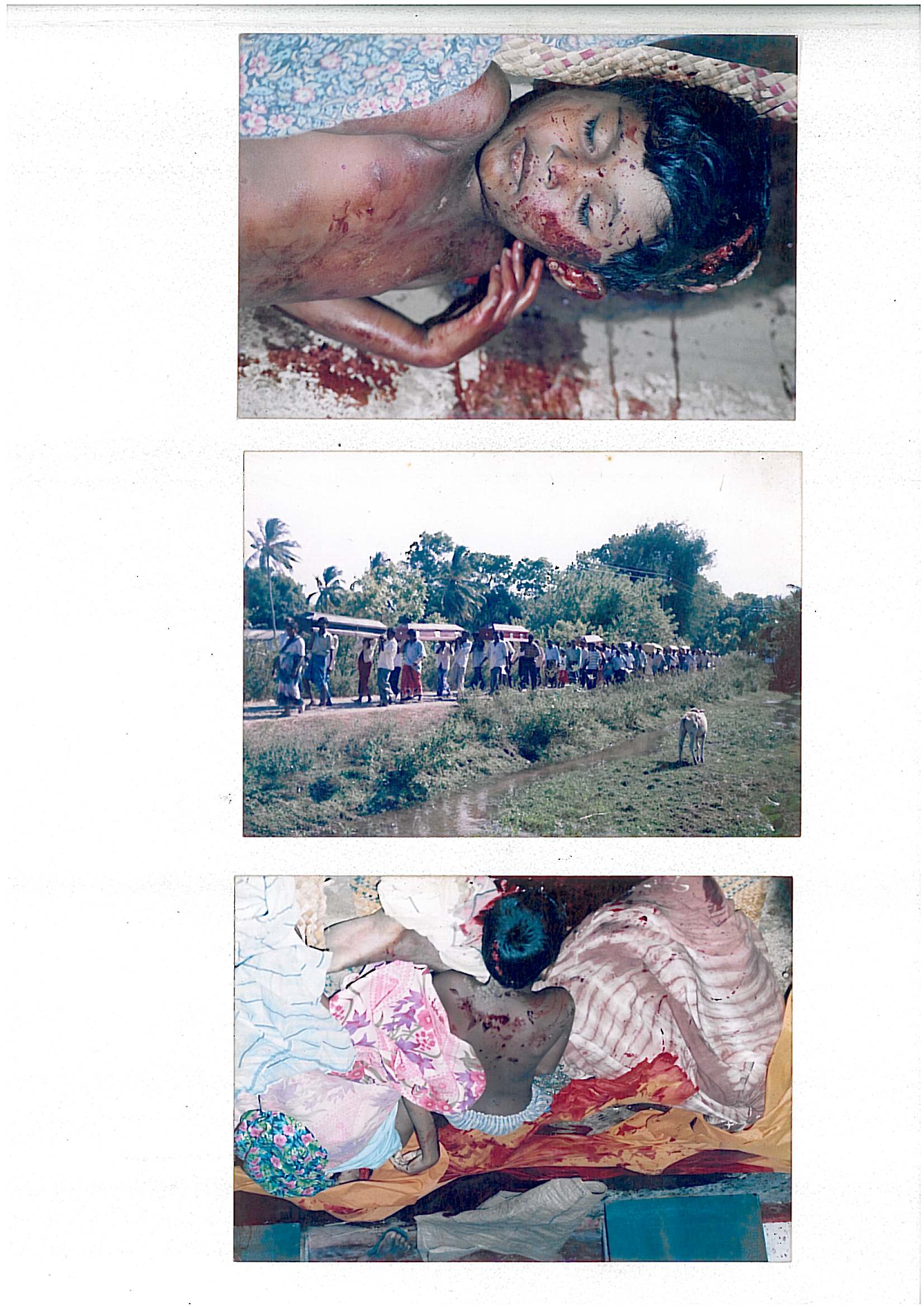
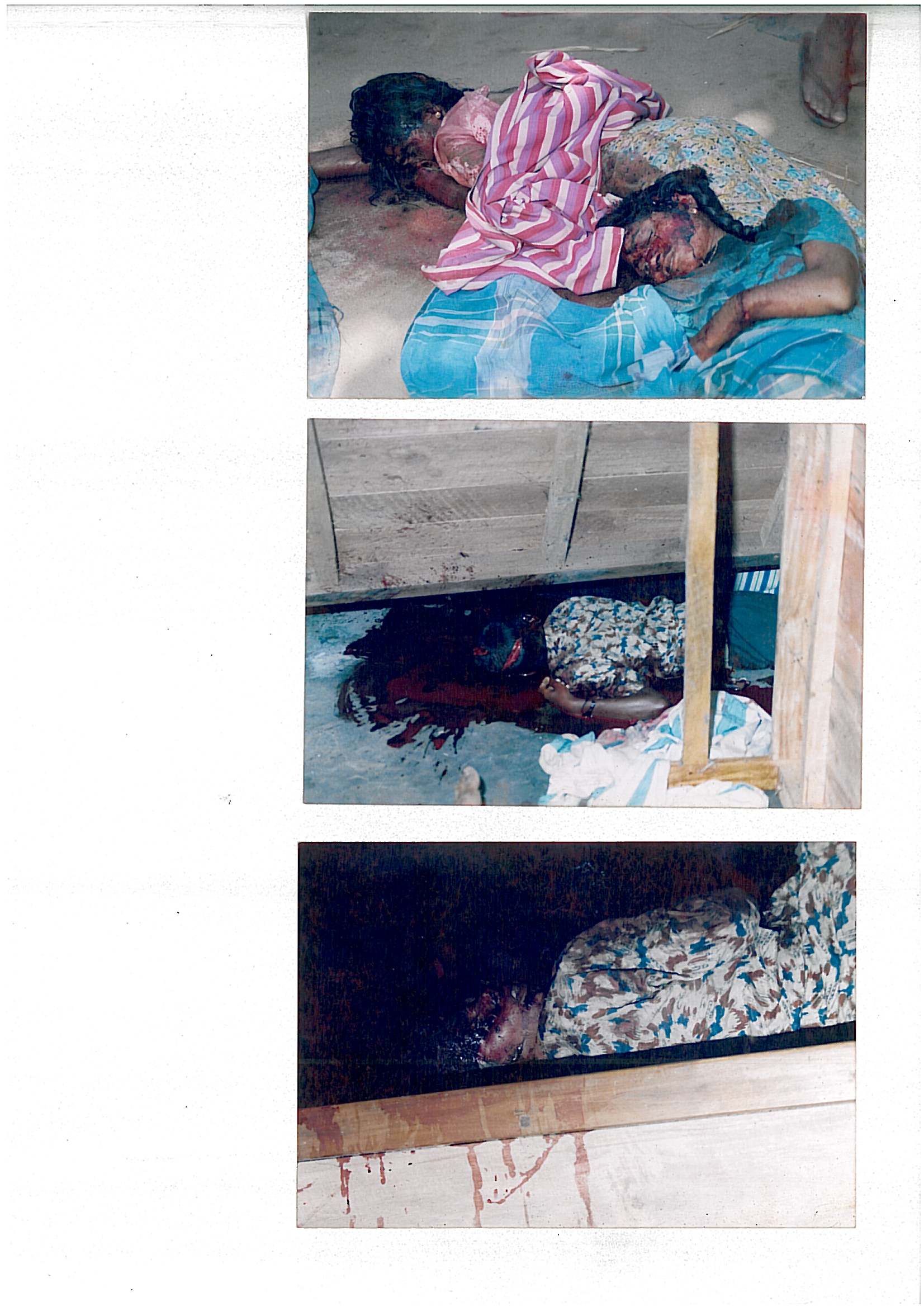
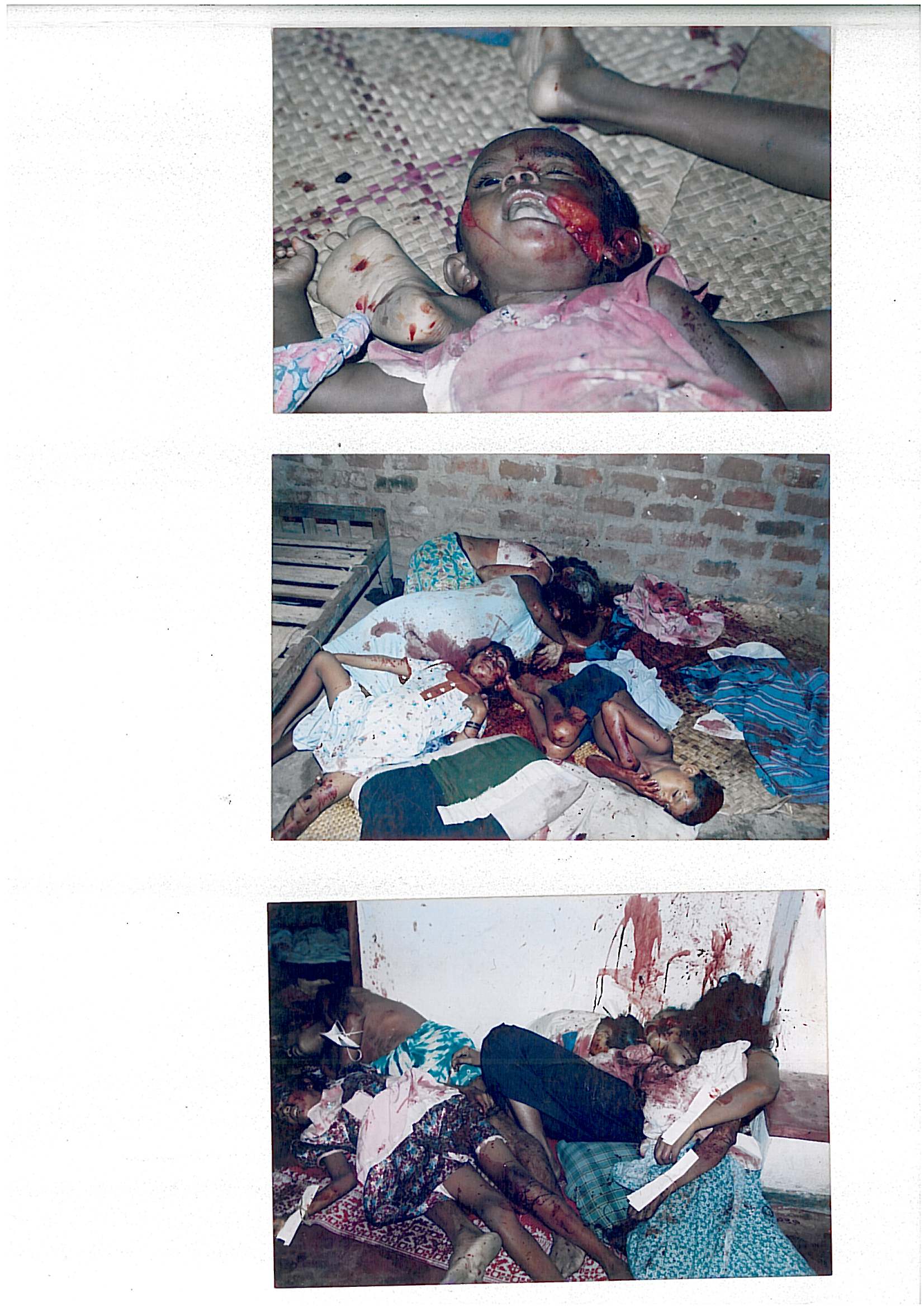
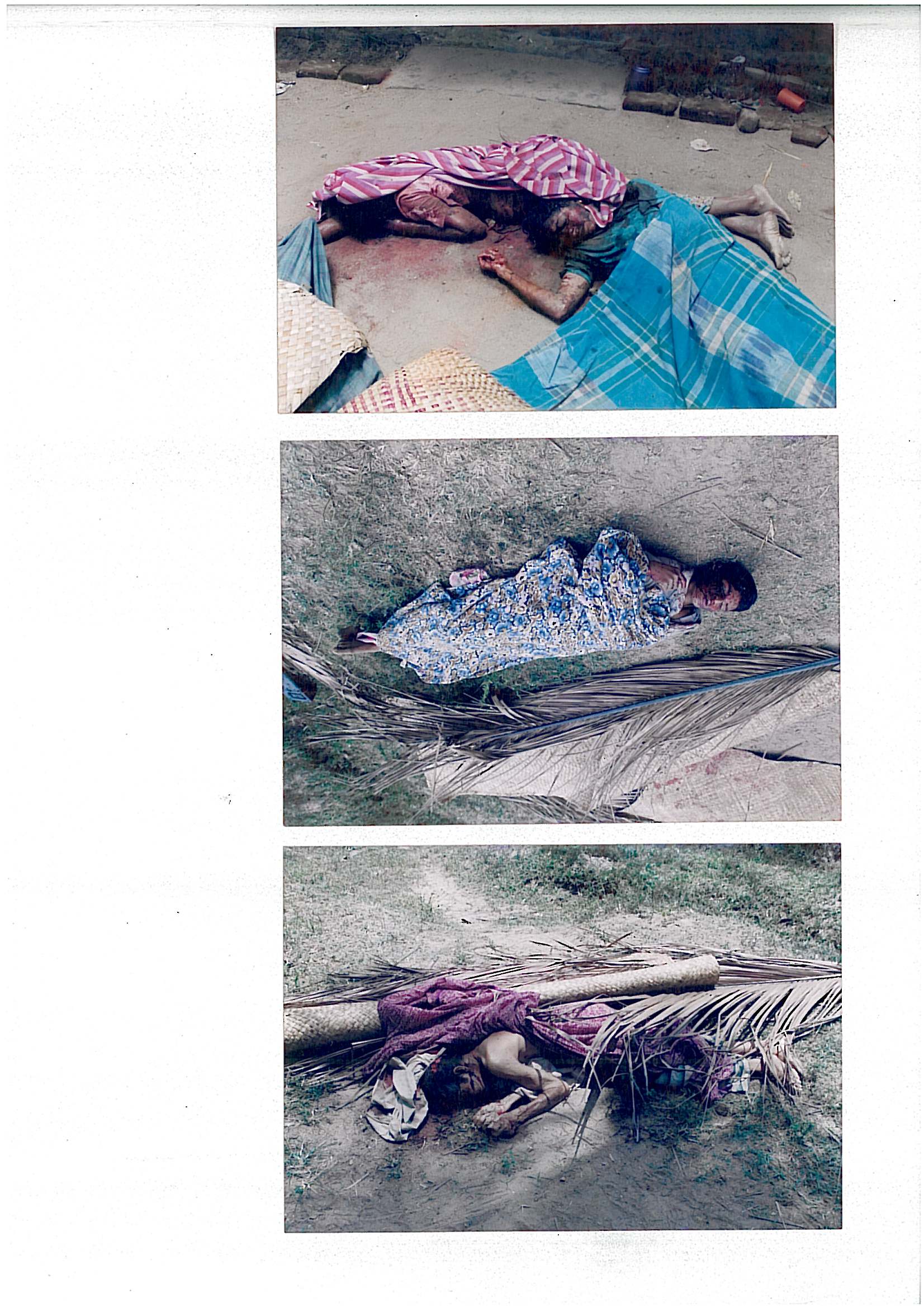
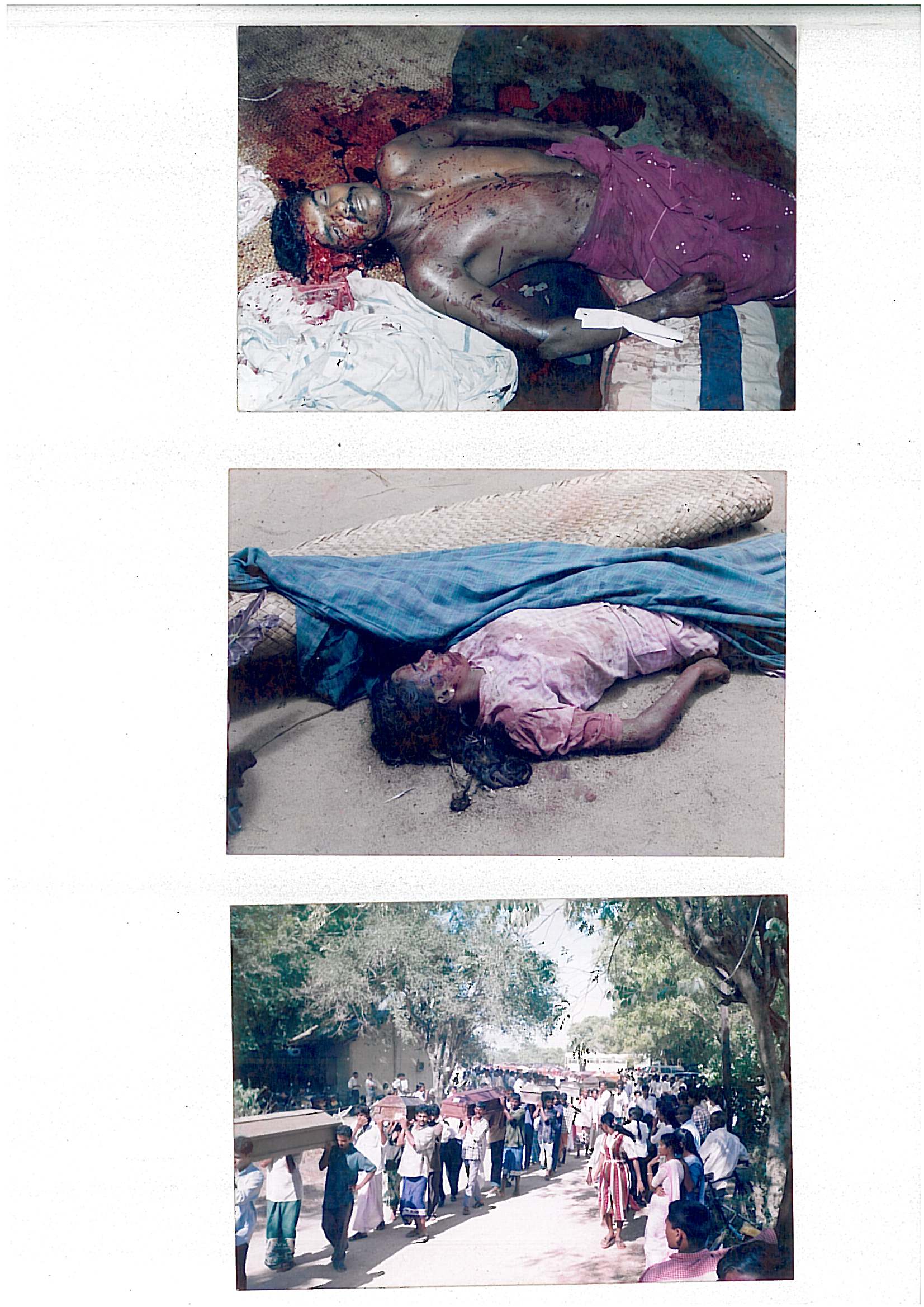
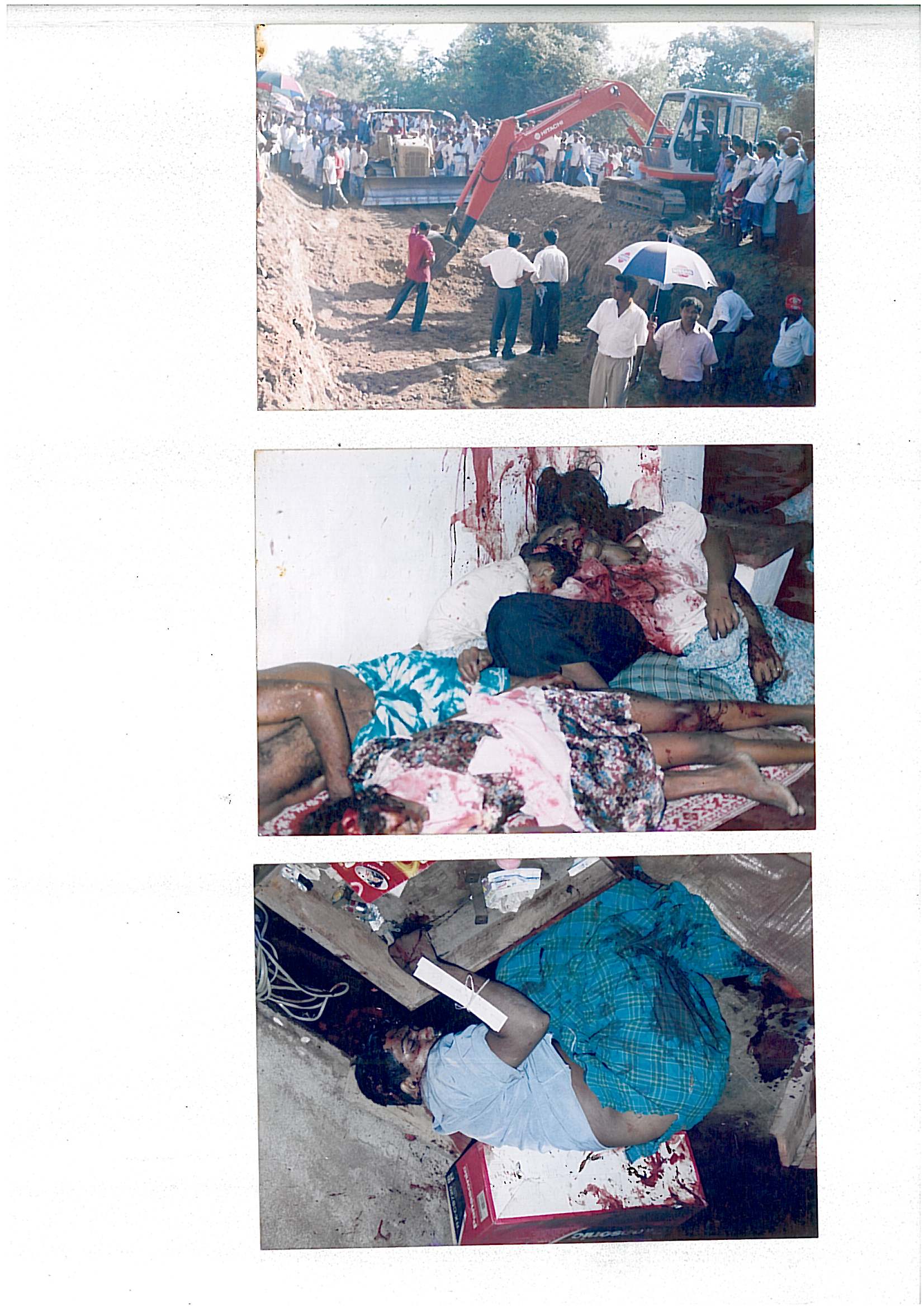
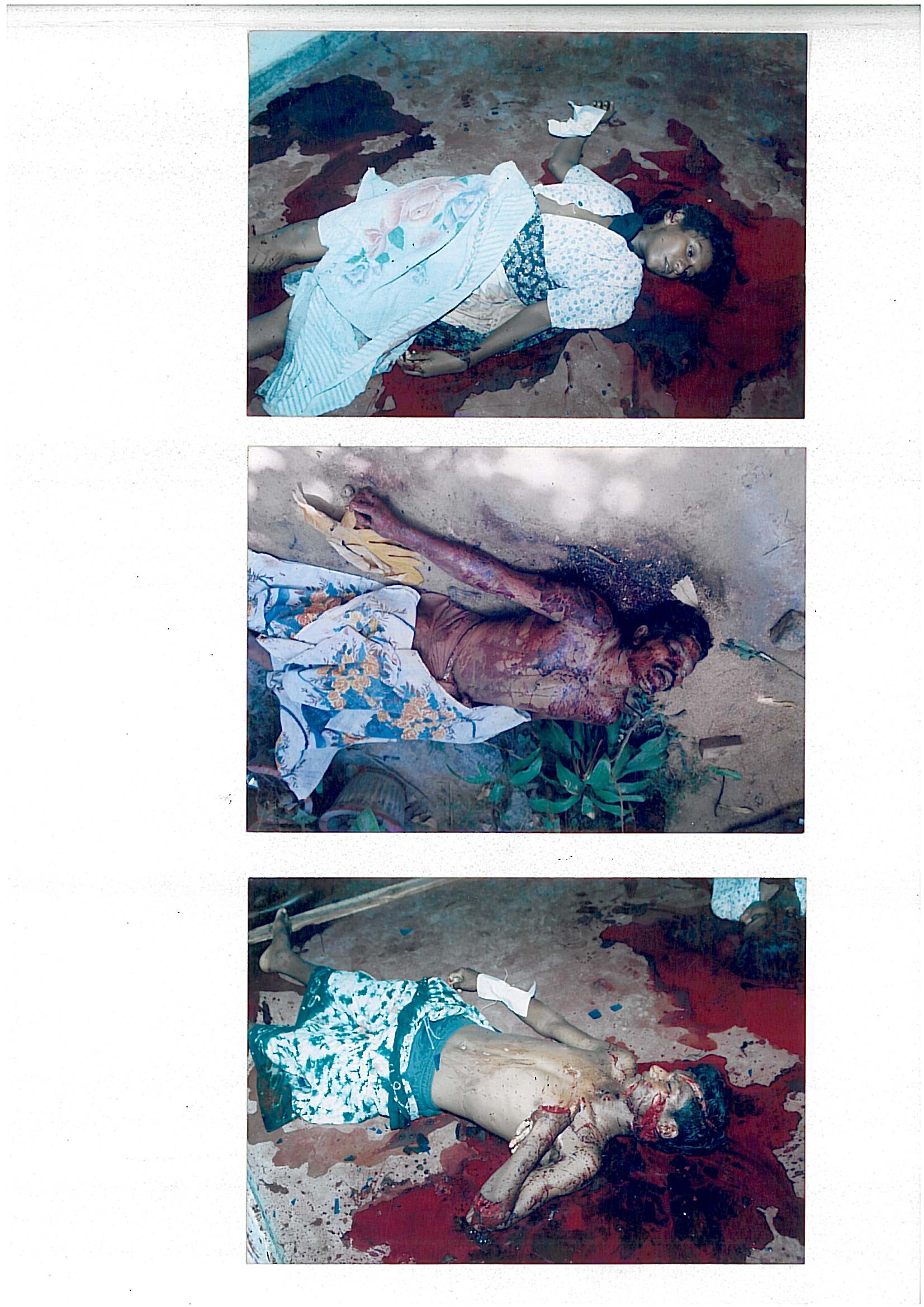
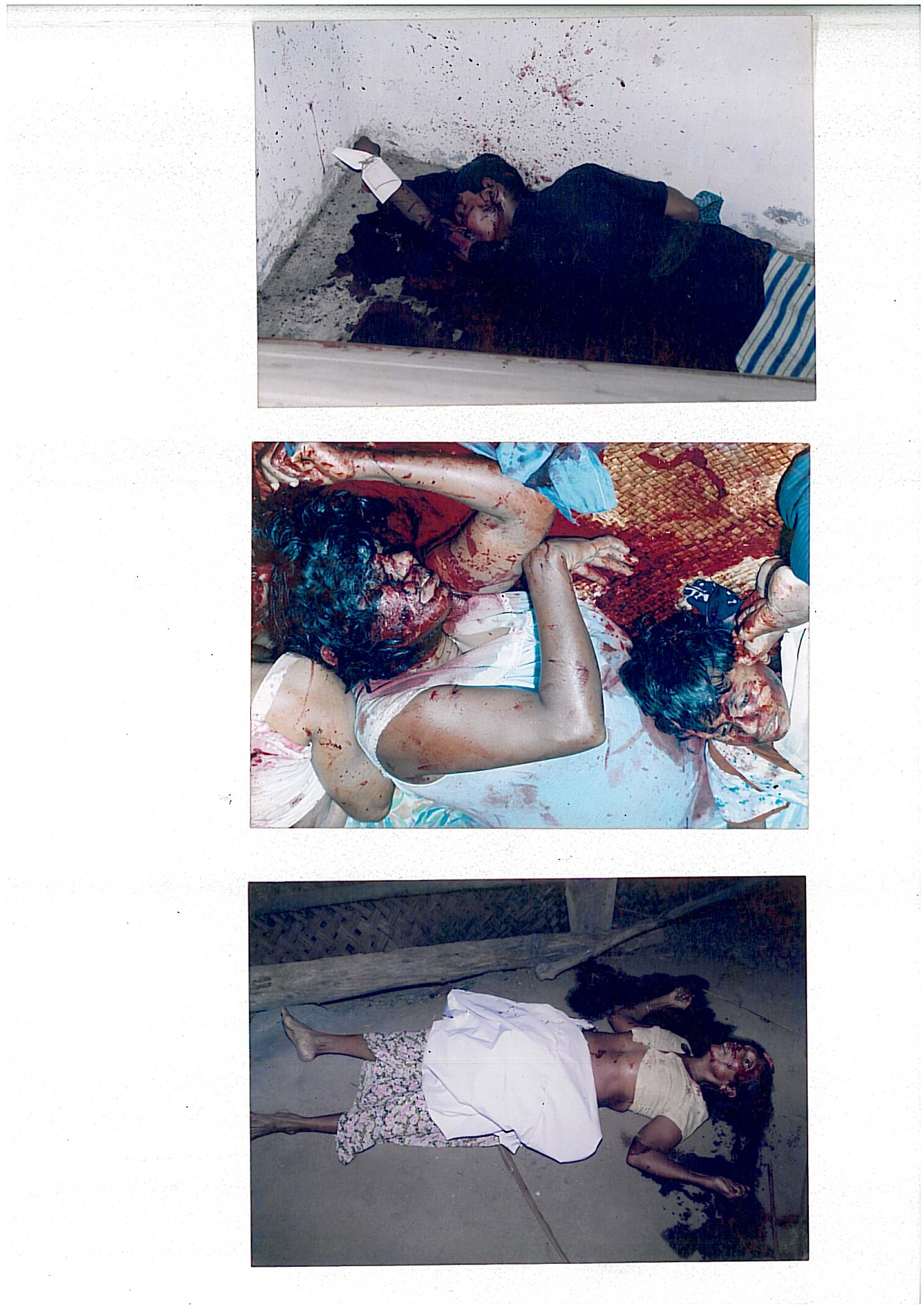
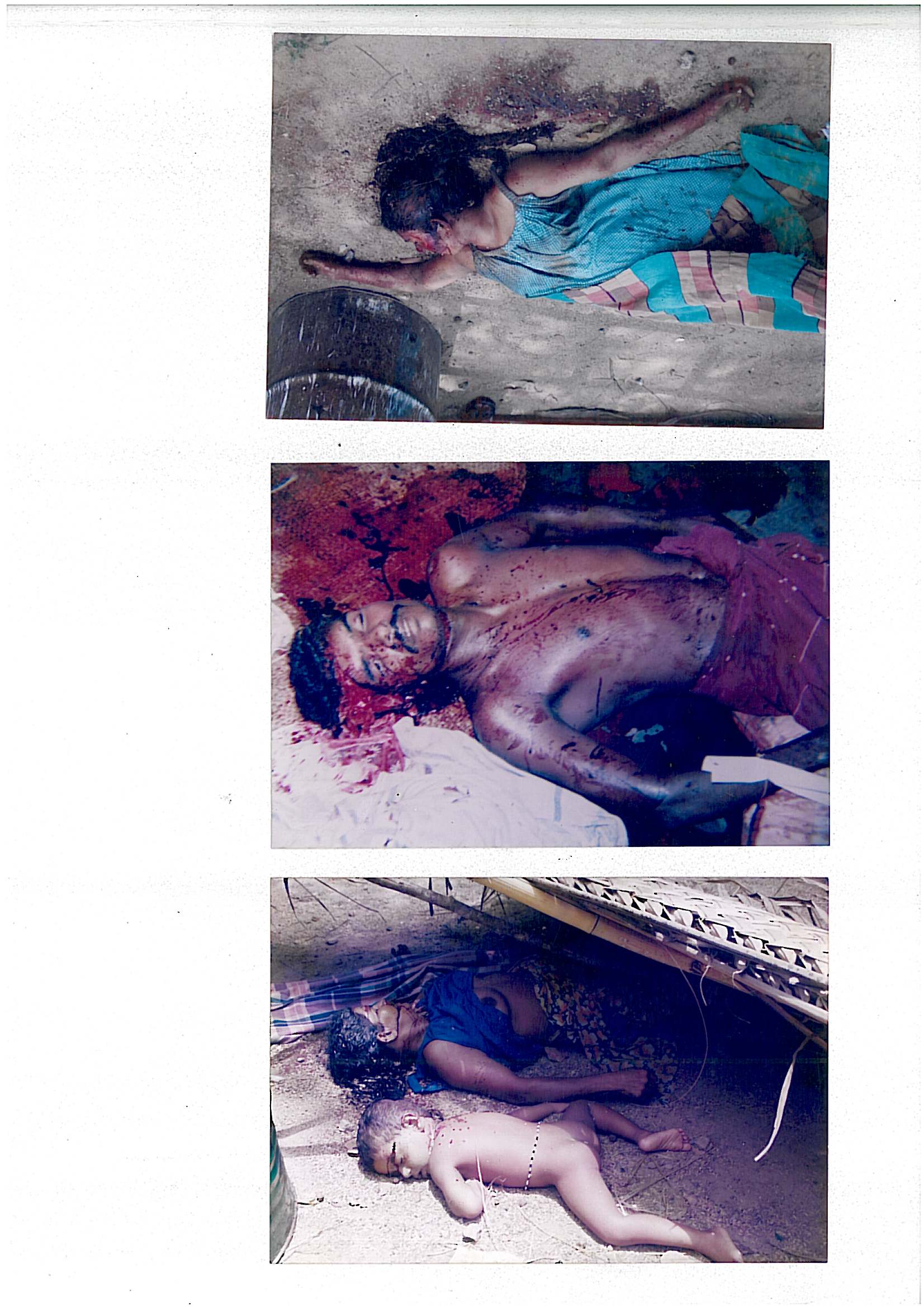
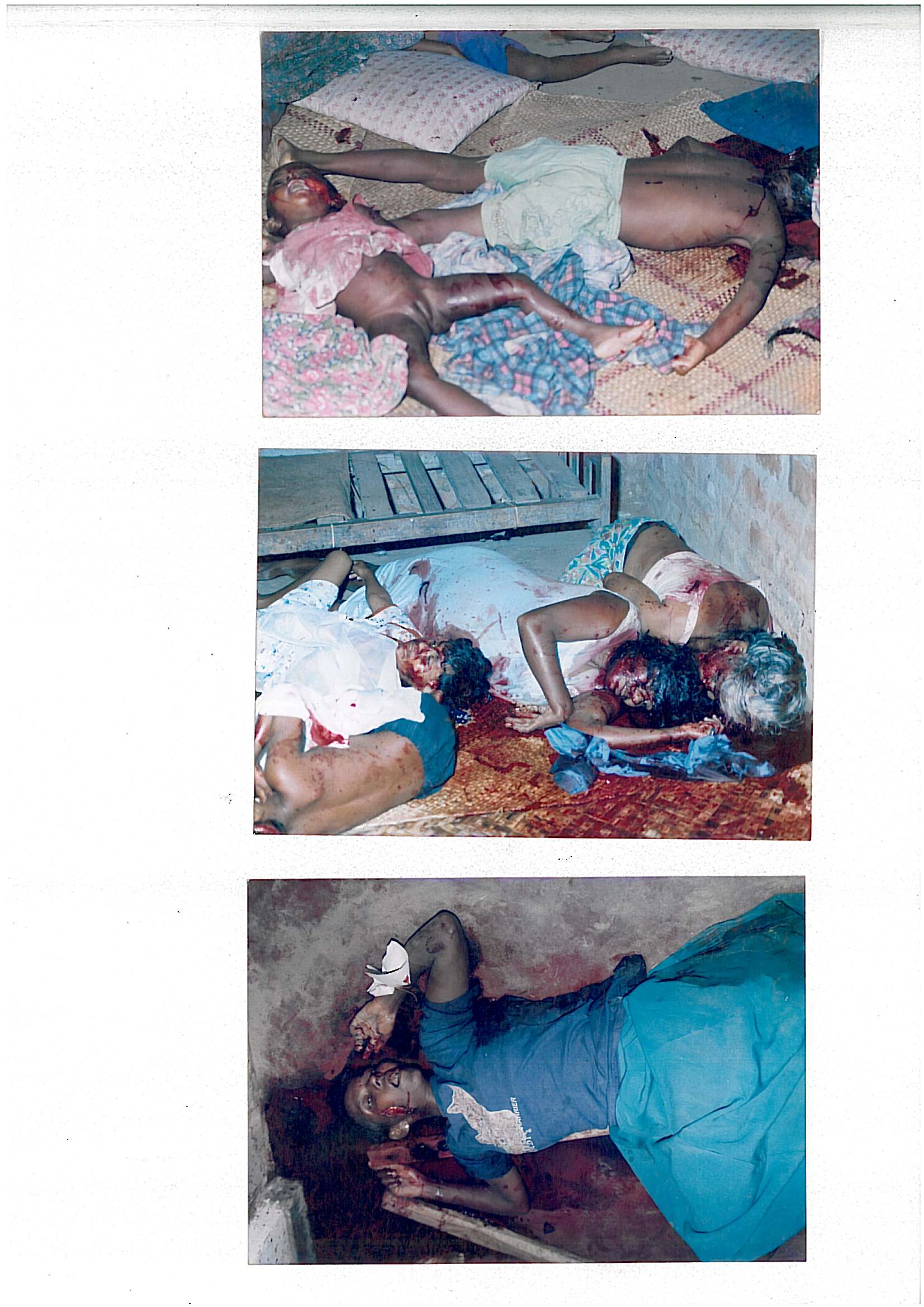
The photographs below are said to have been taken in Gonagala on the day of the attack. They were published in 2011 on a blog whose author states that they were taken by his uncle, the first photographer to reach the village [5]. They are shown as scanned pages of printed photographs, three to a page. Most show the bodies of victims, including children, and are hidden until you choose to view them.
Disputed or uncertain points
- Death toll. Reports give 50 (Frontline), “more than 50” (Amnesty International) and 54 (The Sunday Times). The figures for how many died in Gonagala itself and in the neighbouring settlements also differ.
- Number of attackers. The Sunday Times reported about 75; Frontline reported that defence authorities estimated about 10.
- Firearms. The Sunday Times reported one victim shot with a revolver; Frontline reported that no firearms were used.
- Photographs. The photographer and the exact date and place of the photographs above have not been independently verified.
- Women among the attackers. Survivors reported that women cadres took part. Later accounts stating that most of the attackers were women are not supported by the contemporary sources reviewed here.
Sources
- 54 killed as LTTE unleashed terror on villagers Original ↗
- Carnage in eastern Sri Lanka Original ↗ Archived copy ↗
- Sri Lanka: Deliberate killing of more than 50 civilians by LTTE Original ↗
- Ampara villagers still in jaws of death Original ↗
- ගාමනී චිත්රපටියේ නොතිබුණු, ගෝනගල ගමේ සැඟව ගිය ඇත්තම ආදර කතාව 2 (Hiss Ahasa blog) Original ↗